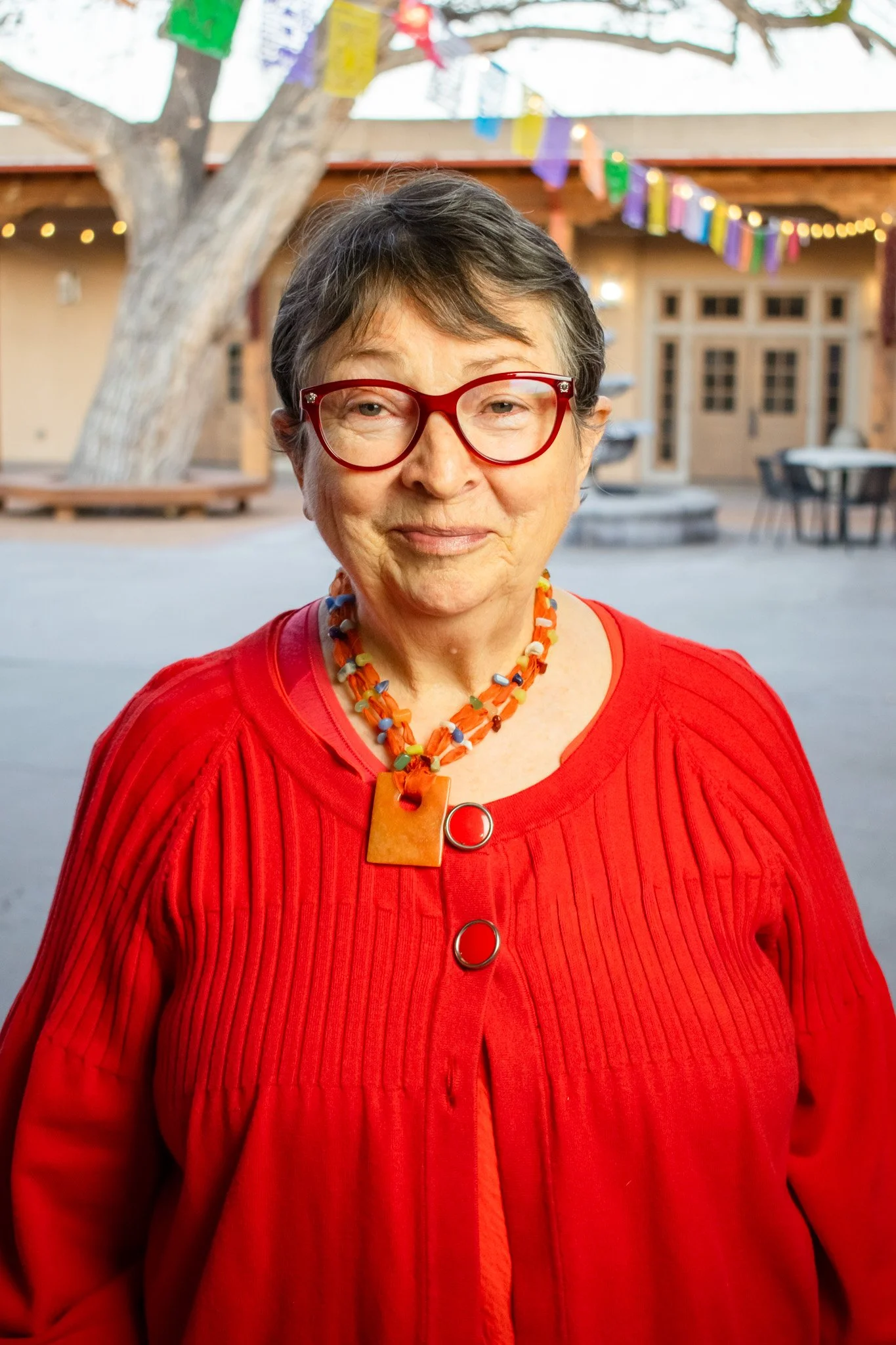
I come from Mountain dwellers who made a journey from the village of Los Luceros in Northern New Mexico, the verdant homeland, to escape annual floods that destroyed the corn, calabacitas, and green beans. From warmth to severe mountain weather, leaving the easy blossoming of a lower elevation and gambling that apple trees could “take root.” This was my family’s journey of faith, in their abilities to farm, and their desire to grow their family. We all spoke archaic Spanish. In 1954, when I was born, the house of Seferina and Telesfor Lopez comprised a kitchen, no bathroom, and several relatively large bedrooms with beds for children born yearly: 13 of us. One giant stove warmed a large kitchen. It was purchased after selling three sheep.
After working in New Mexico and Washington DC, I went to Denver and learned about writing and research, an experience described as "the fastest ride on a roller coaster " by someone working at the Latin American Research and Service Agency, where I worked at the end of the 1990s and into the beginning of the 2000s. Responding to current events, I wrote issue reports and quarterly newsletters that taught me to write more like a reporter on the beat. That was the time I most felt exposed to the experience of how institutions and the government are helpers and not just places, like prisons, where people go when they misbehave. It was a heady time, although a time of humility also, as one health care activist from back then told me: We were just creating nonprofits; we didn’t set out to change history; it was fun to figure things out”—because we could. In Denver, with a group of fewer than 15, I worked at one of the most vibrant Hispanic organizations. I learned that a small group could have a big impact, and I believe if the 12 apostles could change theworld, a group of Burqueños can too.
“Paso Por Aqui”, says a poster I found years ago. Written on a rock by someone passing through El Jornado de Muerte/the Journey of Death in the desert near Las Cruces, New Mexico. It is translated by some as the journey of one dead person, although I think culturally it speaks more to the reality of a harsh land where lack of water made you paste walked on by ants in three days. It speaks to our need to know we made a difference, if only by being here, being on the journey. And writing it down. To communicate with other humans who might be “in the area” that someone has been here before and might even still be alive somewhere down the path. Maybe not—being metabolized as food for coyotes.
After Mom died in 2015, I rested, having only family responsibilities until 2021. Since that time my engagement with the Peñasco Valley Historical Preservation Society, the 2nd Presbyterian Church's Solace Group, and the Hispanic Women's Council have been my primary interests until now.
I am thinking, we seem to live in an undemocratic country, a different country than we thought we walked in, that now seems a “mapless” country. But let’s be clear: We do have that map, as our own efforts have shown in those decades I’ve lived through, from the 50s to the quarter mark of the 21th century. For those without knowledge of prior justice movements, it’s time to learn about them. I was struck by the lesson proven by a woman in Iran, in a movie about civil law versus religious law as it affected her marriage and family. She ended the movie by saying: “Read.”
Conclusion:
Now for the patience and claiming of our persevering humility, if we can find it. Culturally, we have some incredible guides, some of whom are dead, like a writer who called herself an editor, Maya Angelou. Maya Angelou wrote in her lovely and fierce book of poetry about a Black woman running with her children from dogs and White men who wanted their property back (namely the woman and her children). The Black "slave" would rather die and have her children die than GO BACK TO THE PLANTATION. Angelou, a great soul who is now dead, left us these memorable lines in the poem called "Our Grandmothers."
...."however my ignorance and conceits, lay aside your fears that I will be undone for I will not be moved."